PASSAGE LENS PARTNER KIT
Three Bible questions worth exploring with your audience.
Each campaign includes a substantive passage guide, a short product demonstration, and ready-to-share copy. Choose the question that genuinely fits your audience. Readers can study the context first, then open the exact passage in Passage Lens and ask a follow-up.
Preview the Matthew guideMatthew 5:17–20
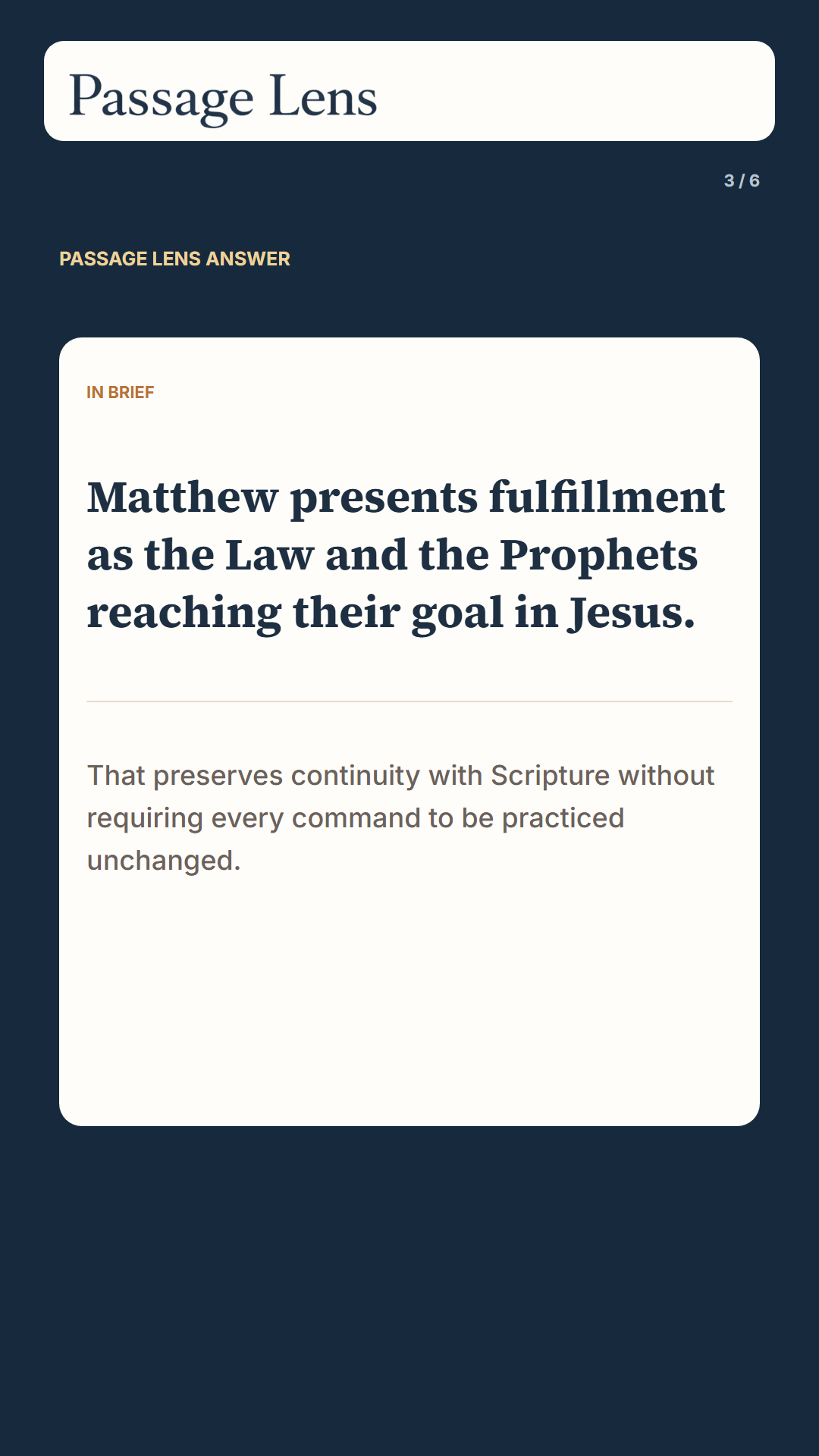
What does Jesus mean by “fulfill the law”?
Why this question connects
It addresses a common question about Jesus, the Old Testament, and why Christians apply biblical commands differently.
What readers receive
A direct answer, the surrounding passage, the key interpretive distinction, and a one-click path to ask their own follow-up.
Ready-to-share caption
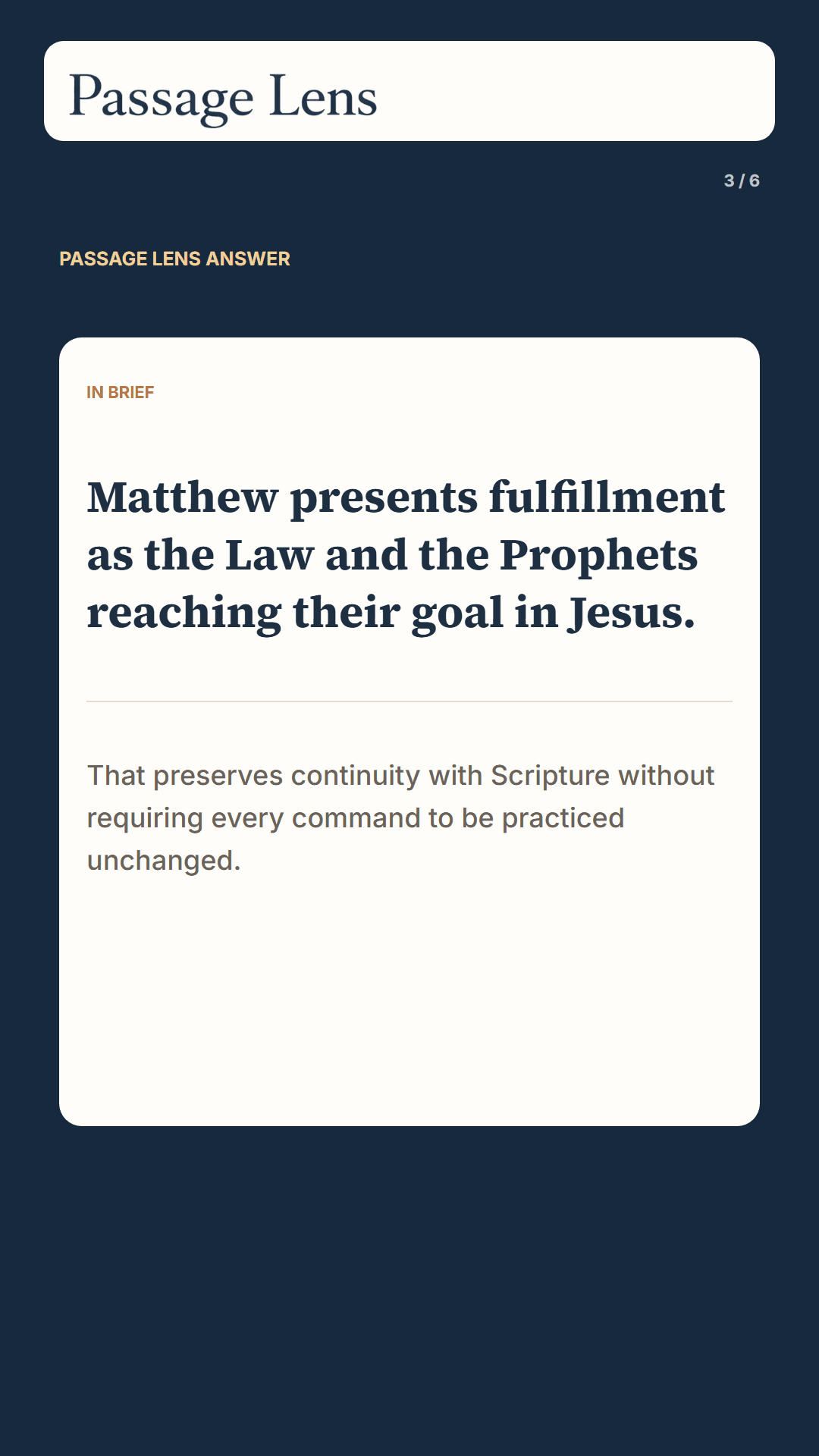
Jesus says he did not come to abolish the Law and the Prophets—but Christians do not apply every Old Testament command in the same way. This guide explains what “fulfill” means inside the Sermon on the Mount and where Christian traditions agree and differ. What passage made you pause? Comment the reference.
Newsletter summary
Jesus says he came to fulfill the Law and the Prophets, yet Christians do not apply every Old Testament command unchanged. Read Matthew 5:17–20 inside the Sermon on the Mount, see how Jesus deepens the commands that follow, and compare where Christian traditions broadly agree and genuinely differ.
James 2 and Ephesians 2
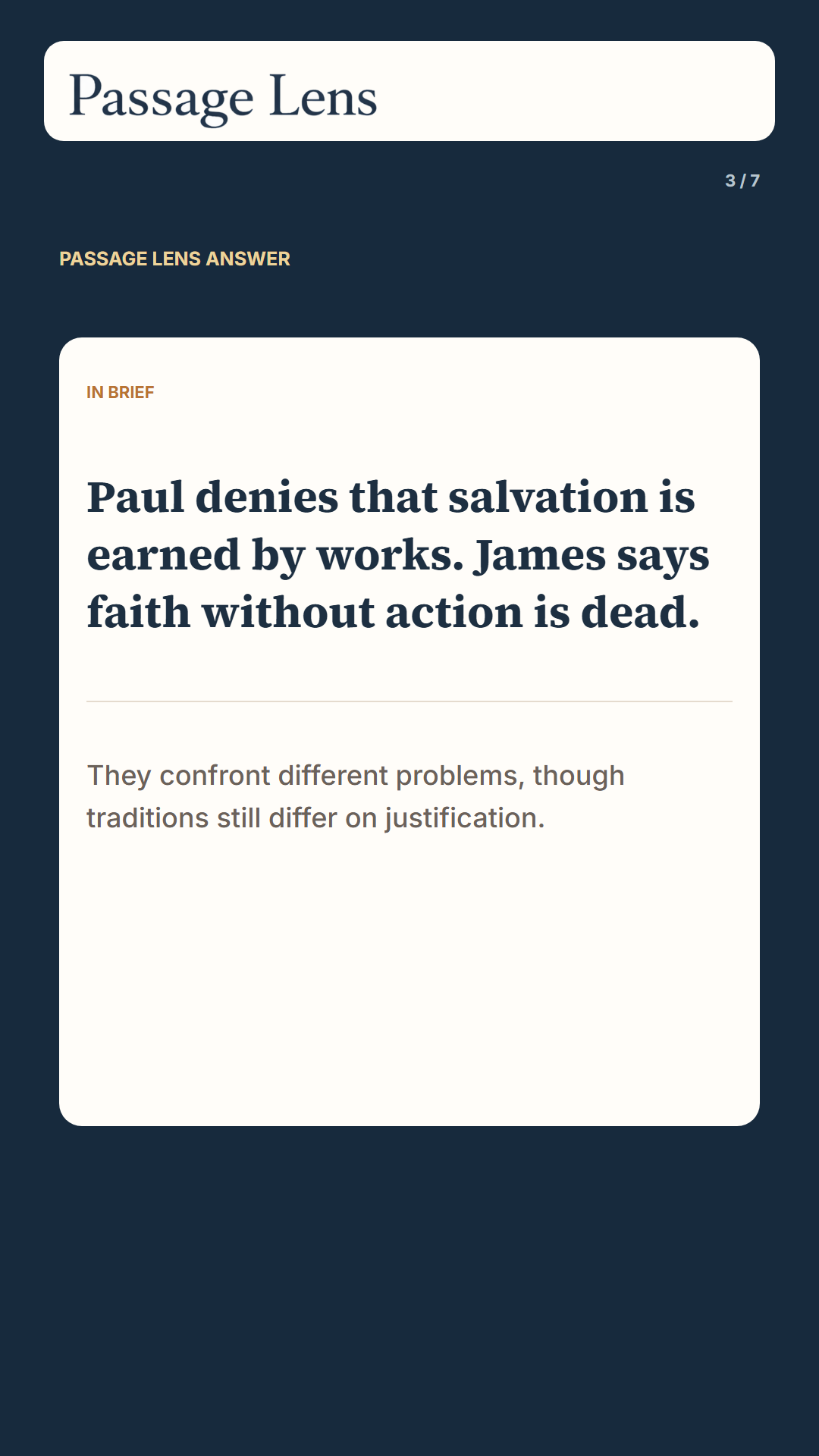
Do James and Paul contradict each other about faith and works?
Why this question connects
It gives readers a responsible way into one of the New Testament’s most famous apparent contradictions.
What readers receive
A direct answer, the surrounding passage, the key interpretive distinction, and a one-click path to ask their own follow-up.
Ready-to-share caption
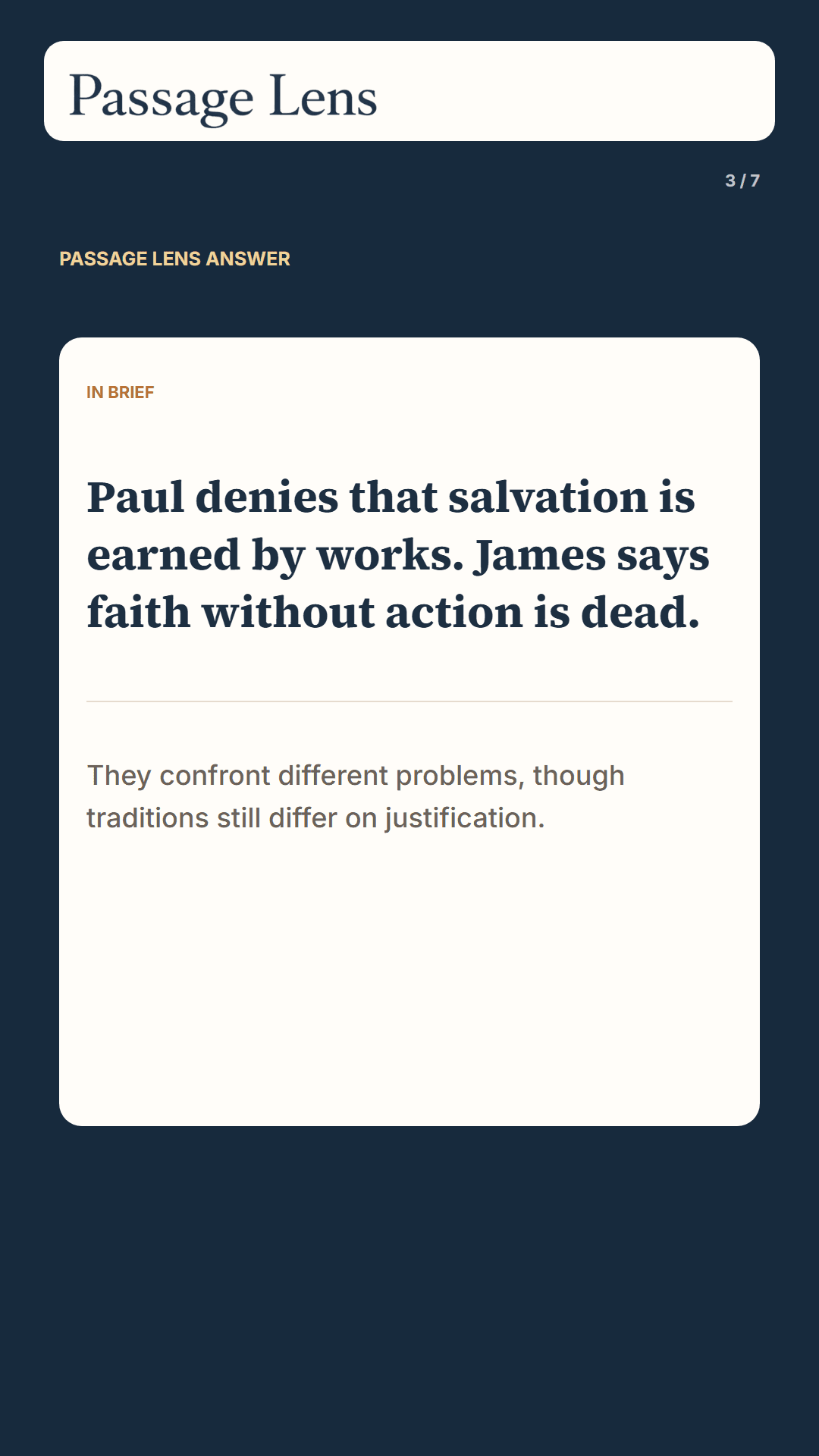
Paul says salvation is by grace through faith, not works. James says a person is justified by works and not by faith alone. The wording collides, but the two writers are confronting different failures. Read both arguments before deciding they contradict. What passage made you pause? Comment the reference.
Newsletter summary
Paul says salvation is by grace through faith, not works. James says faith without works is dead. Read Ephesians 2:8–10 beside James 2:14–17 and 2:24–26, see the different failures each writer confronts, and compare how Christian traditions hold grace, faith, and a changed life together.
Philippians 4:10–14
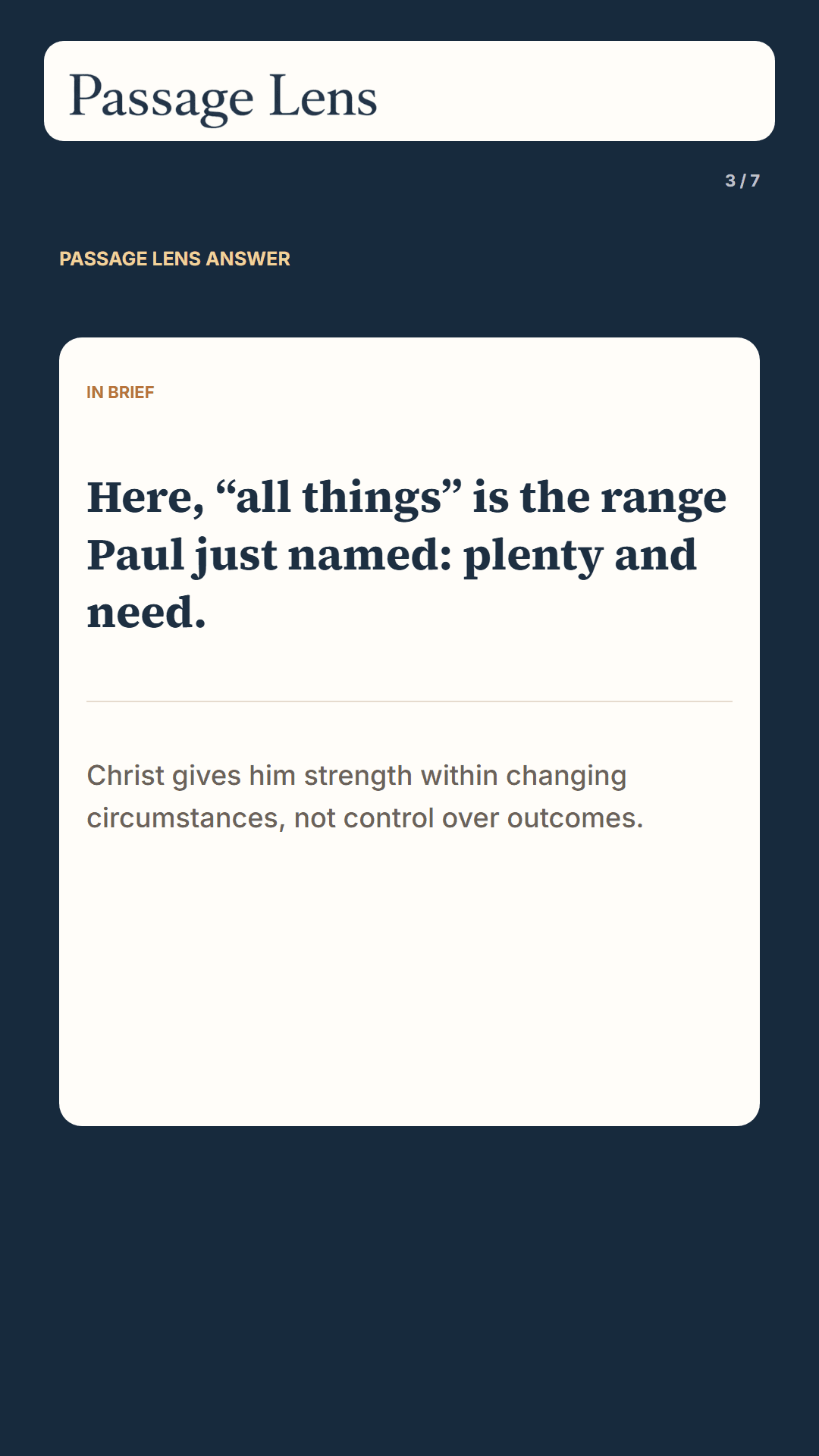
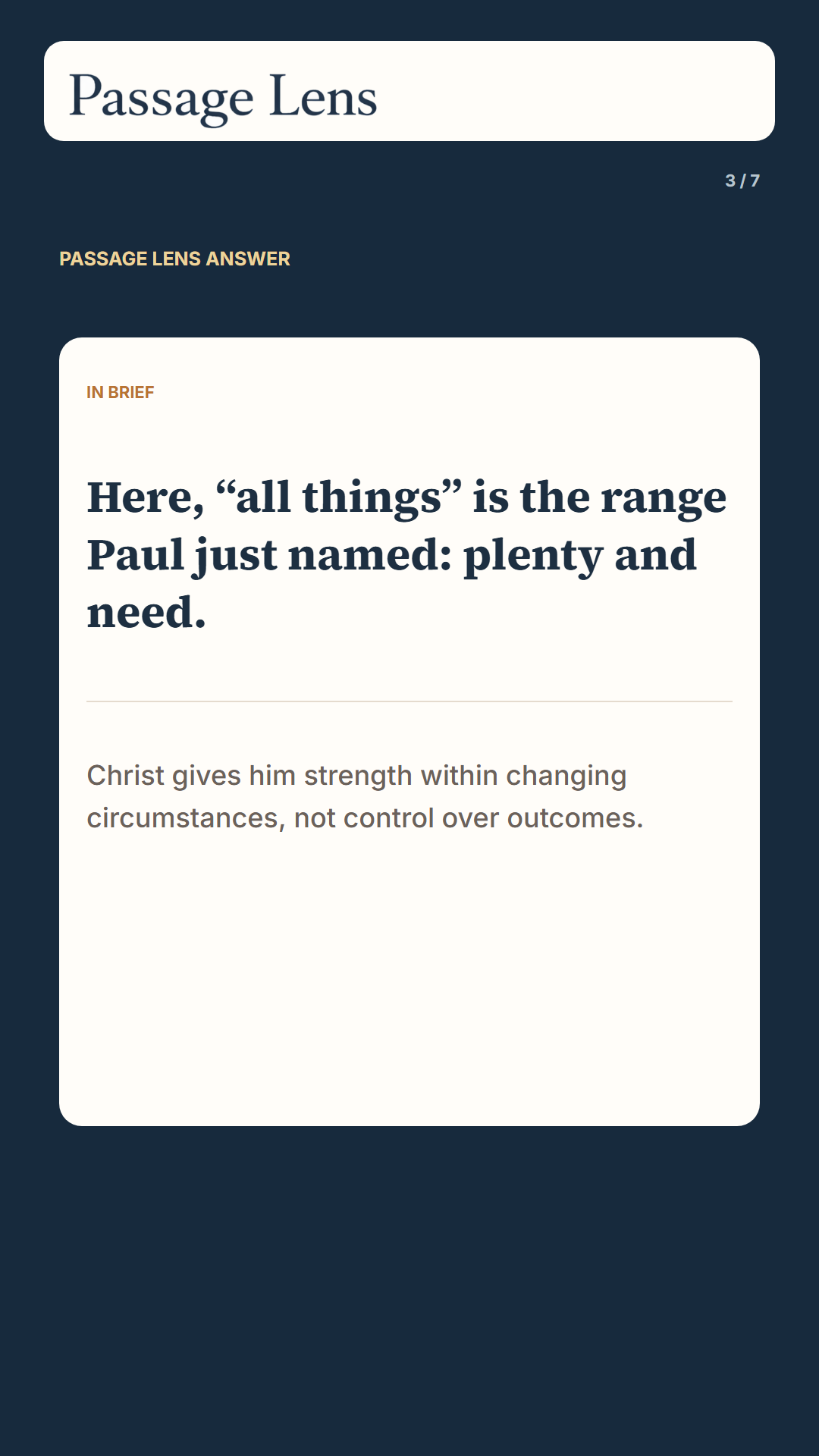
What does “I can do all things” mean in context?
Why this question connects
It revisits a familiar verse by restoring the circumstances Paul names around it.
What readers receive
A direct answer, the surrounding passage, the key interpretive distinction, and a one-click path to ask their own follow-up.
Ready-to-share caption
“I can do all things” is not a promise of unlimited achievement. In the two verses before it, Paul names hunger and plenty, need and abundance. The promise is strength to remain faithful when circumstances change. What passage made you pause? Comment the reference.
Newsletter summary
Philippians 4:13 is not a promise of unlimited achievement. Read verses 10–14 together to see Paul name hunger and plenty, need and abundance, and the gift that prompted his thanks. The promise is Christ-given strength to remain faithful when circumstances change.